2025 OSH EA-SEA Subregional Report
- Version
- Download 283
- File Size 5.46 MB
- File Count 1
- Create Date February 23, 2026
- Last Updated February 23, 2026
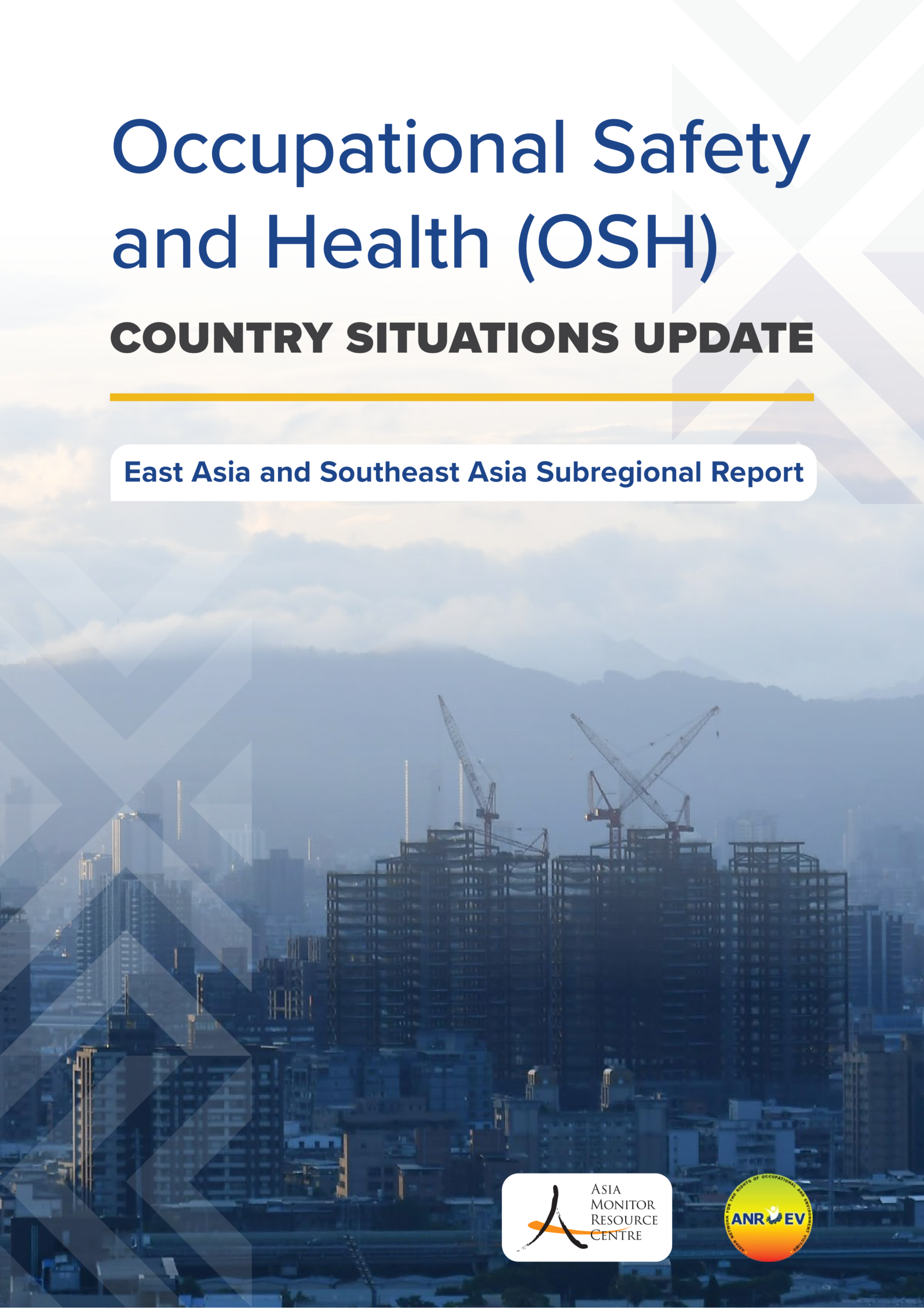
2025 OSH EA-SEA Subregional Report
Since the 2022 Biennial meeting, the Asian Network for the Rights of Occupational and Environmental Victims (ANROEV) has undergone significant evolution. It has increased focus on subregional groups, centered on East Asia (EA), Southeast Asia (SEA), and South Asia (SA). For the ANROEV, the Asia Monitor Resource Centre (AMRC) has actively supported EA and SEA subregional grassroots partners on key issues related to occupational safety and health (OSH).
In November 2024, ANROEV convened the East Asia and Southeast Asia subregional meeting in Taiwan, which brought together representatives from 27 member organizations across 10 countries. The meeting featured a session where representatives discussed creating a subregional report that evaluates each country’s OSH situation to inform network members about the current status, realities, and challenges. This practice and exercise not only serve as a backbone for national and regional advocacy but also enable network members to enhance their research capacity and develop a sense of belonging and ownership of the network initiative.
Subsequently, researchers were identified, and a working group was formed and convened in July 2025. The working group meetings were crucial for discussing key OSH issues in the respective countries, given the distinct contexts and histories within which unions and civil society operate, as well as the challenges workers face. The meetings also served as a space to hold one another accountable and to be motivated during the research and drafting process, and to exchange input. The research contributions were submitted by September 2025, and the AMRC supported revisions, editing, and layout design by December 2025.
This report covers six countries: Taiwan, South Korea, Indonesia, the Philippines, Thailand, and Cambodia, with recommendations based on an assessment of each country’s OSH situation. There are eight chapters in total, including an introduction and a conclusion.