International Declaration for the Health and Human Rights of Semiconductor Workers
Publisher: Supporters for the Health and Rights of People in the Semiconductor Industry (SHARPS)
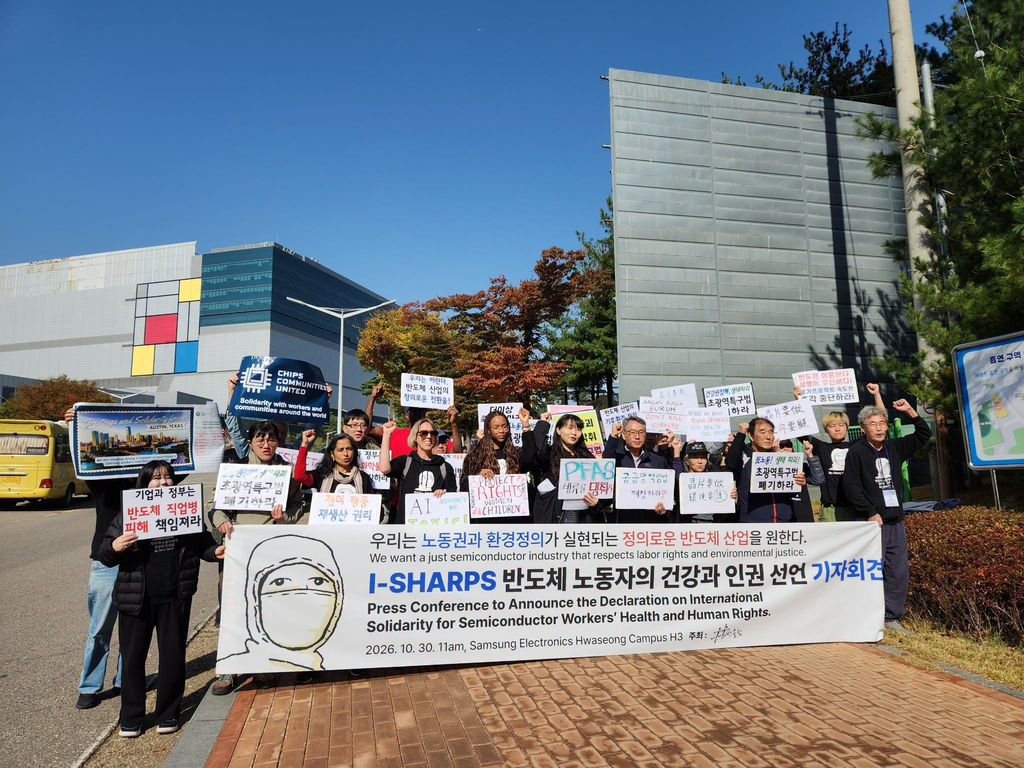
We stand in solidarity across borders to achieve a just transition in the semiconductor industry that protects workers’ health and human rights and the environment. We hereby declare the following:
First, we stand in solidarity with the struggles of victims of occupational diseases in the semiconductor industry to have their illnesses recognized as occupational injuries and diseases and call on governments to reform existing systems to ensure broader recognition of occupational diseases.
The semiconductor industry uses more chemicals than almost any other industry; however, it is also characterized by some of the most stringent barriers to disclosure in the name of trade secrets. When victims are denied access to information, proving the occupational causes of their illnesses is nearly impossible. Therefore, the burden of proof must not be placed on the victims. Governments must remove barriers to occupational disease recognition and establish systems that enable broader recognition of work-related illnesses. Recognizing that the semiconductor industry crosses national borders to evade regulations, we will document and expose cases of occupational diseases among semiconductor workers and experiences in responding to these harms across the countries. We will work together to explore ways to ensure just compensation for victims and prevent occupational diseases.
Second, we demand the right to know about the chemicals used throughout the semiconductor supply chain and stronger regulations governing their use.
Chemicals must be managed in ways that protect workers, local communities, and the environment. Governments and corporations must establish chemical management systems based on the precautionary principle. Governments must strengthen corporate accountability for the management of hazardous chemicals. Corporations must presume that substances whose hazards have not been adequately identified may be hazardous and take appropriate precautionary measures. They must also transparently disclose information on the chemicals they use to guarantee the right to know of workers, local communities, and those harmed by exposure. Workers and local communities have the right to participate meaningfully in decision-making processes that affect their health and safety. These principles must be implemented in accordance with international agreements, processes and standards, including the Global Framework on Chemicals (GFC), with the ultimate goal of realizing a “toxic-free and just semiconductor industry.”
Third, we demand gender equality and protection of reproductive rights in the semiconductor and electronics industries.
Women in the semiconductor and electronics industries have experienced systemic gender inequalities and marginalization, including wage discrimination, gender-based occupational segregation, and unequal working conditions. In particular, reproductive health risks and harms associated with occupational exposure to reproductive toxicants and shift work constitute a serious problem. Across multiple countries, women workers in the semiconductor and electronics industries have reported a range of reproductive health problems, including miscarriages, menstrual irregularities, infertility, and congenital conditions and disabilities in their children. Corporations and governments must thoroughly investigate and prevent the effects of workplace conditions on the health of workers and their children. Governments must also strengthen institutional safeguards, including compensation for children affected by occupational exposures, and develop relevant legislation and policies to protect reproductive rights. Women workers in the semiconductor and electronics industries must be treated with equal respect as men, and workers’ reproductive health must be recognized as a core issue in occupational safety and health. We call for the experiences and voices of women workers to be meaningfully reflected in government policies and corporate decision-making.
Fourth, we stand in solidarity to prevent the destruction of life and ecosystems caused by the expansion of the semiconductor and AI industries and data centers.
We express our deep concern about the impacts on workers’ and local residents’ health and the ecological environment of the profit-driven expansion of the semiconductor industry, the AI industry, and data centers around the world. The expansion of the semiconductor industry, backed by full state support and deregulation, threatens to bring massive increases in water and electricity consumption and greenhouse gas emissions. Moreover, the semiconductor industry releases per- and polyfluoroalkyl substances (PFAS), often referred to as “forever chemicals,” causing irreversible harm to human health and the environment. Local residents and workers must therefore be given sufficient information about environmental impacts in advance and guaranteed the right to participate meaningfully in decisions concerning the construction and operation of relevant facilities. In an era of climate crisis, decisions concerning water, energy, and food must be made through democratic decision-making processes. Climate and environmental justice must be realized throughout the semiconductor industry.
Fifth, we affirm the need for a Supply Chain Accountability Act to effectively address labor, human rights, and environmental abuses arising from the semiconductor industry and call for its enactment.
Labor, human rights, and environmental abuses across the global semiconductor supply chain―from mining and raw material extraction to manufacturing, products, and waste disposal―are not confined to any single stage of the supply chain. Corporate supply chain due diligence must not be reduced to a mere box-ticking exercise; it must identify actual and potential impacts throughout the entire supply chain. Corporations must also ensure the meaningful participation of stakeholders, including workers, local communities, victims, and public-interest whistleblowers, throughout the due diligence process. They must take full responsibility for the findings and eliminate the risks identified or that may arise. States must establish laws and systems that require corporations to conduct human rights due diligence, disclose information, and provide remedies for those harmed, thereby ensuring that corporations fulfill their substantive responsibilities. We affirm the need for a Supply Chain Accountability Act and call for its enactment.
Finally, we pledge that we will never forget the suffering of semiconductor workers, victims, and bereaved families and that we will continue to fight alongside them.
The expansion of the semiconductor industry must never come at the cost of workers’ health and life. Corporations and governments must guarantee workers’ health and their human rights. We will continue to build lasting international solidarity across borders, connecting the experiences of workers and victims until every semiconductor worker can work safely and in good health.
Solidarity in struggle!
Suwon, South Korea, October 30, 2026
Participants in the International Forum for the Health and Human Rights of Semiconductor Workers, including ANROEV network members:
• Dr. Domyung Paek, ANROEV Chairperson
• Asia Monitor Resource Centre (AMRC)
• Taiwan Association for Victims of Occupational Injuries (TAVOI) (工傷協會)
• Taoyuan Country Former RCA Employees’ Solicitude Association
• Ecological Alert and Recovery-Thailand (EARTH)
• International Campaign for Responsible Technology (ICRT)